
Nervous System Coherence for Effortless Speed
We’re back for the second installment of this “Mechanisms For Speed” Mini Series. Today we’re talking about the big rocks that I believe govern true speed expression.
As we spoke about last article, the common ‘speed puzzle’ pieces that are traditionally focused on are: hip extension, dorsiflexion, knee drive, and shin angle. While these small pieces do have to fit together in order for speed to be most effective, they are really just markers of bigger pieces up the chain working congruently. Before I would zero in on those mechanisms specifically, I like to first look at how things are working globally as a whole.
Strategic sport speed requires zooming out first, to ask some better questions. If I wanted ‘y' (hip extension) to change, I need to know what ‘x’ (hip function) currently looks like. How does x need to change in a way that affects the outcome of y?
In my opinion, the biggest puzzle piece required in unlocking effortless speed is function and coherence of the nervous system. Speed expression is governed by the nervous system’s function, so I always start there—looking at the system (body) collectively before I begin to zoom in further.
There are a few other key pieces connecting into this puzzle that help to further create a solid foundation for speed expression to unfold. These include: strength, capacity, body awareness, rhythm and coordination, and cognitive speed.
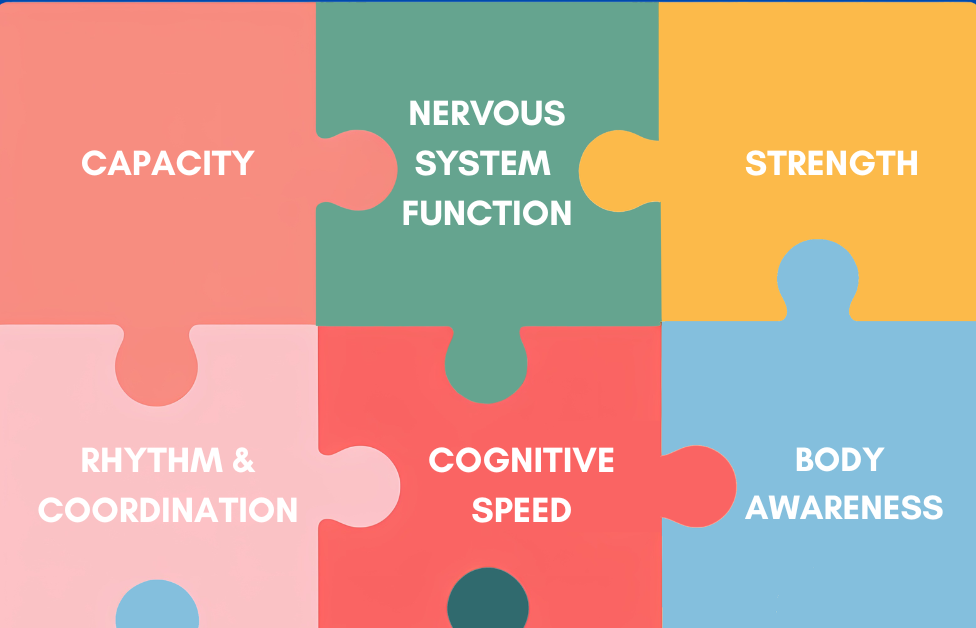
If these big pieces aren’t connecting well first, the smaller pieces we discussed above, won’t be as effective in translating into the speed you seek.
In hip extension, for example, if an athlete doesn’t have a good baseline of strength to begin with, they aren’t going to be able to support their body weight in the deeper angles required for better projection.
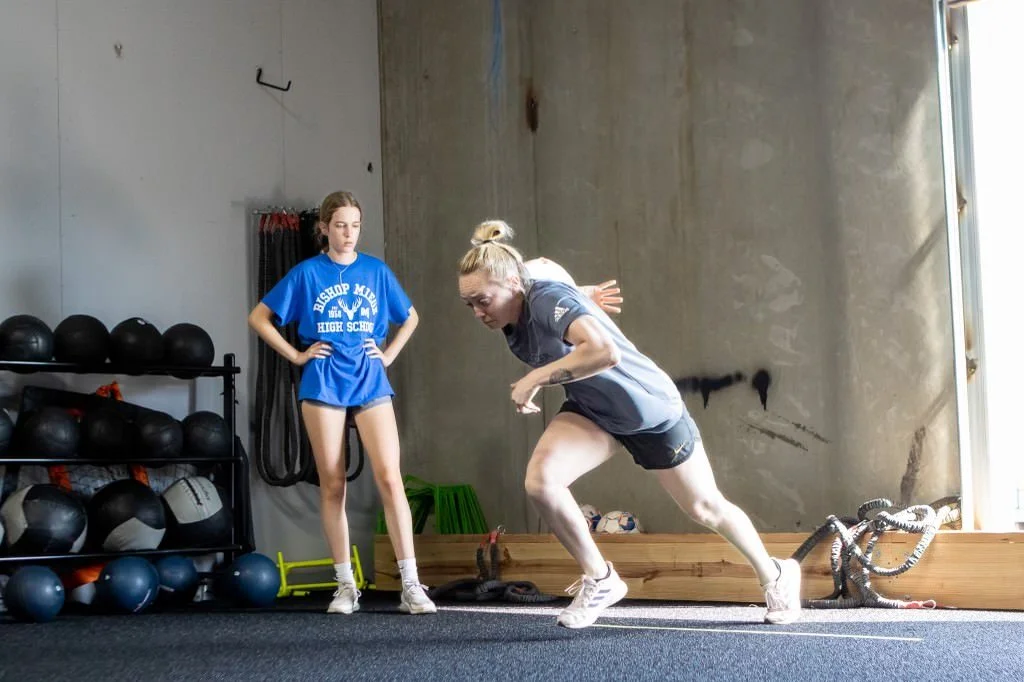
But what kind of strength are we even talking about? How do we make sure the strength we're building transfers to sprint speed, so we’re not just wasting our time in the weight room?
To talk strength, we need to first talk function. The whole point of the strength is to make it functional for sport. When we’re talking function, this is really what I’m looking at:
Nervous System Coherence: communication & regulation
Strength & Capacity: joint & tissue robustness, & fatigue management
Awareness: proprioception, visual, & vestibular systems
Rhythm & Coordination: sequencing & flow
Cognitive Speed: quick decision making under pressure & fatigue
All of these branches work together harmoniously. A lack of communication and translation in any part of chain results in lack of speed expression. If one or more of these pieces are lagging, you will leave some of your potential to express your greatest levels of strength, speed, and power on the table.
Before the nervous system operates for optimal performance, it operates first from a place of safety and survival. Your nervous system has the ability to slow you down protectively, in order to keep you safe. There is no bypassing this programming, and we wouldn’t want there to be, it is what keeps us alive.
So the question becomes: If we can’t bypass it, how do we work with it most effectively?
Speed is a byproduct of function, function comes from system control, control comes from access to all parts of the system, access comes from trust in yourself, trust comes from safety—both in your body, your ability, and in your environment. So safety is where we start to build the coherence we’re after.
As we spoke about last article, one of my first steps in assessing athletes is determining how their visual, vestibular, and proprioception systems are functioning. This typically paints a good picture of how their nervous system is currently functioning as a whole. I’m looking mainly at their ability to be visually and spatially aware, and how able they are to control and coordinate basic movements.
Are they fluid or do they move clunky? Do they hesitate, guard, or compensate?
I’m looking for patterns of tension and cohesion which directs my attention to possible areas of mistrust in the body. The body cannot lie.
For example: If Athlete ‘A’ can’t get low enough in their cut to create the joint angles needed to generate force from, where do they feel insecure or restricted? Is it a physical restriction? A mental restriction? Both? All of these factors play a role and communicate with each other. So even if it’s a mental block, it’s going to also affect the physical body, and vise versa. We are physiologically designed to operate as one cohesive system, everything affects everything.
Access to certain tissues can become blocked or stagnate due to previous injury or trauma that the body hasn’t yet felt safe to resolve. If the athlete doesn’t trust their body to get into a deep cut due to a prior injury or a bad experience, the nervous system won’t allow access to that range of motion until you begin to signal safety.
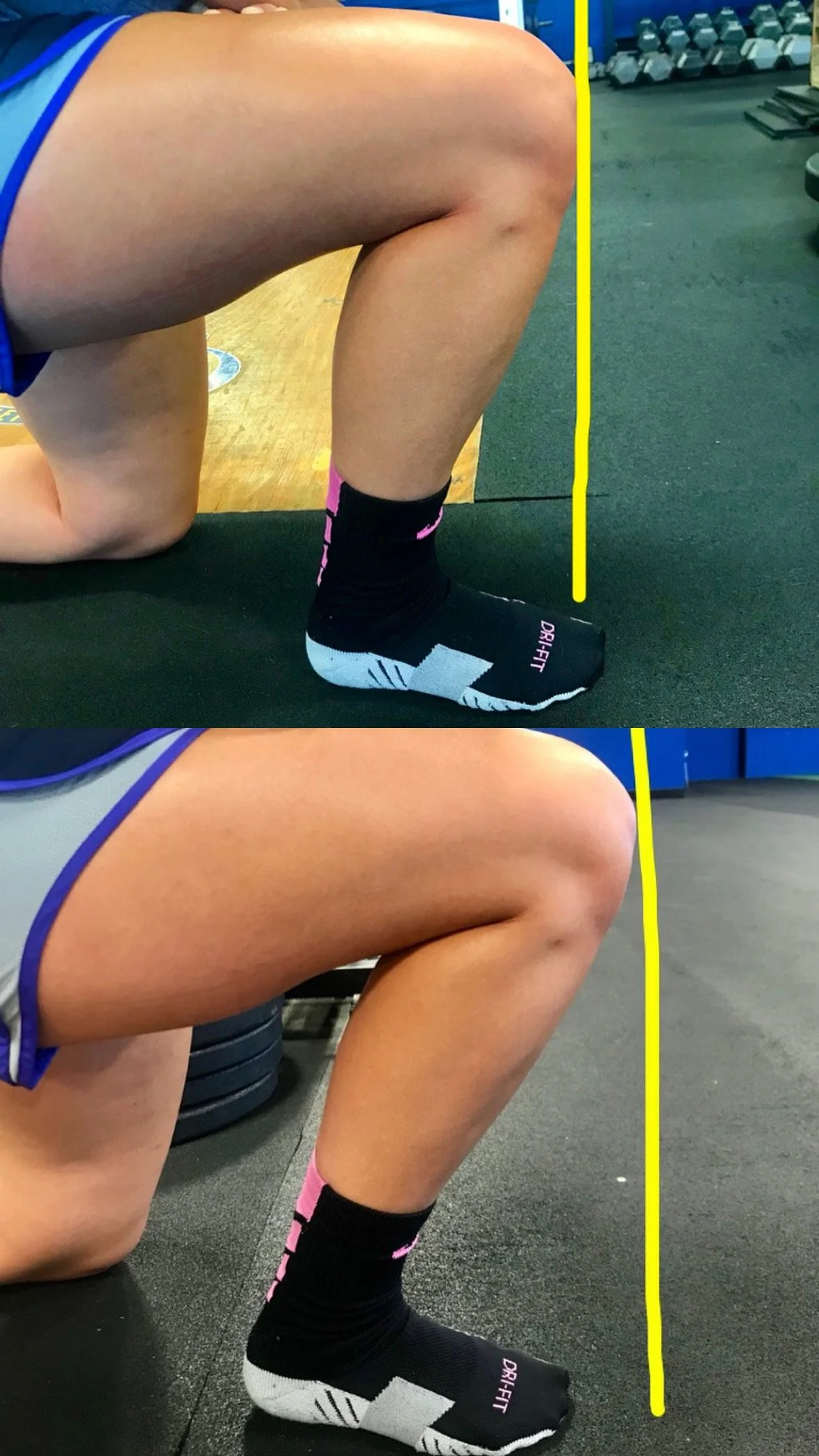
Example of an ankle “block” in an athlete with a history of multiple ankle surgeries. Top picture is initial assessment, Bottom is 10 minutes post training after using a combination of Isometrics paired with an FRC protocol.
Restore safety = restore how the system communicates, flows, and functions = restore speed
Once I have a clearer picture, we build a plan around restoring communication and regulation within the body and mind, so it may feed into better awareness, coordination, capacity, and processing speed.
Feeling safe in both your body and your environment requires athletes to be able to access the parasympathetic state, not just at rest but also in training, as that is where we begin to rewire the system. It’s learning to find balance between an optimal state of arousal that doesn’t feel too consuming or overwhelming to the athlete. A state of challenge versus a state of threat.
In this way, athletes take back control by learning to:
Downshift & upshift arousal
Recognize internal state (breath, tension, attention, & intention)
Stay present under low external stress
Increase functionality by rewiring suboptimal postures & movement patterns
This allows athletes to develop a calmer baseline to build from as we chase higher performance metrics. As athletes begin to feel safe, you will see their trust in their ability rise, boosting their confidence and allowing them greater access to muscle and joint control and function.
Better access to tissues (muscles & tendons) allows us to build both specific and systemic tissue tolerance (strength & capacity) in order to manage fatigue, while also allowing us to balance states of robustness and suppleness within the body for optimal performance. We want joints to be strong but fluid, to allow for optimal force transfer.
If the goal of speed is to be fluid and efficient, it should look quite effortless. As we talked about last article, we also need to take into account the rapid reactive nature of team sport. It typically involves high peak breaking forces when changing direction. We have to first be able to absorb and control the force coming into our system in order to effectively transfer and produce it, and we need to do it quickly.
In the case of Athlete ‘A’, determining where their major limiting factor lies helps us hone our focus.
Are they having trouble absorbing or transferring force? Are they slowing down too much before the cut (issue absorbing)? Are they getting stuck in the cut (issue absorbing & transferring)? Are they slow to get out (issue transferring to produce)? Where are their feet, hips, and trunk positioned in space (awareness)?

The system only produces what it knows it can absorb. That is how strength is built. If we’re having trouble producing force, we need to teach the body how to first handle force coming into system in a more controlled setting.
If it’s more of a transference issue, we need to learn how to effectively contain and store the force we just absorbed, so it can be released/produced up the chain.
Force production is really just a reflection of our ability to absorb and transfer force efficiently. While it is the output at the end of the chain, we want to make sure that it feeds back into our system, creating an effortless loop from absorption to production. That is fluid speed in a nutshell.
How do we build a solid feedback loop? By building capacity alongside the strength we just built, and layering it with rhythm, coordination, and synchronization. In this way speed becomes something that unfolds naturally, when everything is aligned as intended.
The word capacity tends to mean different things for different people, so let me explain. In the case of speed, I use it to define the input needed to handle multiple high effort sprints without a large drop off in performance (output). For me, this doesn’t just mean cardiovascular capacity, but joint and neuromuscular capacity as well.
In fact, I don’t often prescribe strict “endurance running” protocols as typically seen in old soccer packets. Why? In today’s modern sport design, I rarely see athletes becoming heavily “de-conditioned”, because they are playing the sport virtually year round.
I instead use protocols that focus on muscle/tendon capacity in direct relation to team sport needs, as well as breathing strategies to enhance cardiovascular and lung recovery and efficiency. These are protocols I use year round (pre-season, in-season, and off-season).
In the next two articles we will discuss the rhythm and coordination piece, and the awareness and cognitive speed pieces at greater length. While I do build them alongside strength and capacity work, I also reserve a lot of their attention and focus for sprint technique and game-specific training scenarios.
For now, my advice would be to keep things more global before you divide and specialize. This keeps the body functioning congruently and also aids in a sort of ‘recovery support’ alongside all of the repetitive movement stressors that sport practice and games can create.
We want to create support and flow before we begin adding “more” specialized drills on top. That’s not to say you wouldn’t see changes when solely focusing on a smaller puzzle piece like shin angles, but I feel as though that is playing at the micro level instead of at the macro level. Their potential to make a substantial difference won’t be as impactful if the bigger pieces we just discussed aren’t first aligned.
I hope this gets you thinking about how you can develop movement analysis protocols to better determine how athletes are functioning as a whole. Ask more questions, ask better questions, and refine; to develop speed systems that are effective and scalable for the athlete in front of you.
Lastly, make sure to maintain function as performance abilities increase. Just as your car is only as fast as its engine allows, regular maintenance is required for optimal speed performance over long periods of time.
In the next article we’ll begin narrowing our focus to discuss natural sport adaptations and how to train sprint technique for strategic team sport speed. See you then.
